Yukon River Chinook Run Timing

Yukon River Delta. Image by Earth Observatory, NASA.
Yukon River Chinook are predicted to arrive on the delta later than average in 2023: The first significant pulse (15% point) is expected by June 20th and 50% of the run is expected to have arrived by June 26th. See the full 2023 pre-season run timing forecast for more information.
Background
This forecast is intended for use by fishery managers, residents of Yukon River communities, and others to estimate when the Chinook salmon run will arrive on the delta and how it will develop through June and July. The forecast is based on historical catch and environmental variables identified by Mundy & Evenson (2011). This page shows (1) the modeled and estimated cumulative daily percentage of the Chinook salmon run, (2) the cumulative CPUE of the delta test fisheries, as reported daily by ADF&G compared to a selection of cumulative CPUEs of historical runs. As data on the fish migration develop, they will be plotted on Chart 1 so it can be seen how well the actual run matches the model and forecast. If the fit between the modeled and estimated catch diverges considerably, an updated forecast may be issued and posted to this page.
Use this link if you can’t see the graph.
Use this link if you can’t see the graph.
The Need
Known for navigating the longest annual freshwater migration route of any salmon to reach their spawning grounds, Chinook salmon can start arriving on the Yukon River delta at almost any point in June. Over the past 50 years the first pulse of Chinook has occurred sometime between June 6 and June 26. Traditional knowledge on the Yukon holds that spring weather conditions, including ice, temperatures and wind determine when in June the fish enter the river, but each spring brings a different combination of conditions, so pinning down a schedule for the arrival of the first pulse can be tricky. Twenty days can be a long time to wait to find out when the fish are actually coming and if there are enough of them to harvest.
Management of the Chinook salmon fishery is closely linked to expected time of arrival in harvest areas. When the migration begins earlier than expected, it’s reasonable for fishery managers to conclude that the run is stronger than it actually is, possibly resulting in over-harvesting near the river’s mouth and loss of harvest opportunities upriver. Likewise, in years when the first pulse of fish comes late, it is reasonable for fishery managers to conclude that the run is very weak, perhaps so weak that fishing needs to be slowed or stopped altogether.
Project Location
 The Yukon River (Gwich’in: Ųųg Han or Yuk Han, Yup’ik: Kuigpak, Inupiaq: Kuukpak, Southern Tutchone: Chu Nìikwän) is the longest river in Alaska and the Yukon Territory (Canada) at 3,190 kilometers (1,980 miles). The Yukon River’s headwaters are in British Columbia, which then runs (including its many tributaries) through northwestern Canada into interior Alaska, and towards the Yukon-Kuskokwim delta at the Bering Sea.
Project Details
Researchers from NOAA Fisheries and the Alaska Department of Fish and Game, with the support of the Alaska Ocean Observing System, identified a combination of spring conditions that are closely related to the timing of Chinook salmon on the Yukon delta. Using percent spring ice cover between St. Lawrence Island and the Yukon delta, April air temperatures in Nome, and marine surface temperatures just offshore of the delta in May.
This timing and environmental information is intended for use by fishery managers, residents of Yukon River communities, and others to estimate when the Chinook salmon run will arrive on the delta and how it will develop through June and July. The outlook and its associated forecast are based on the historical fish and environmental variables.
The Forecast includes (1) the modeled and estimated cumulative daily percentage of the year’s Chinook salmon run, (2) the cumulative catch-per-unit-effort (CPUE) of the delta test fisheries, as reported daily by ADF&G compared to a selection of cumulative CPUEs of historical runs, and (3) marine environmental data (see charts in the forecast) that are used as inputs to the year’s outlook and forecast model. As data on the fish migration data develop, they are plotted on Chart 1 so it can be seen how well the actual run matches the model and forecasts. When the timing model doesn’t match the actual run, the timing model and forecasts may be updated.
Project Highlights
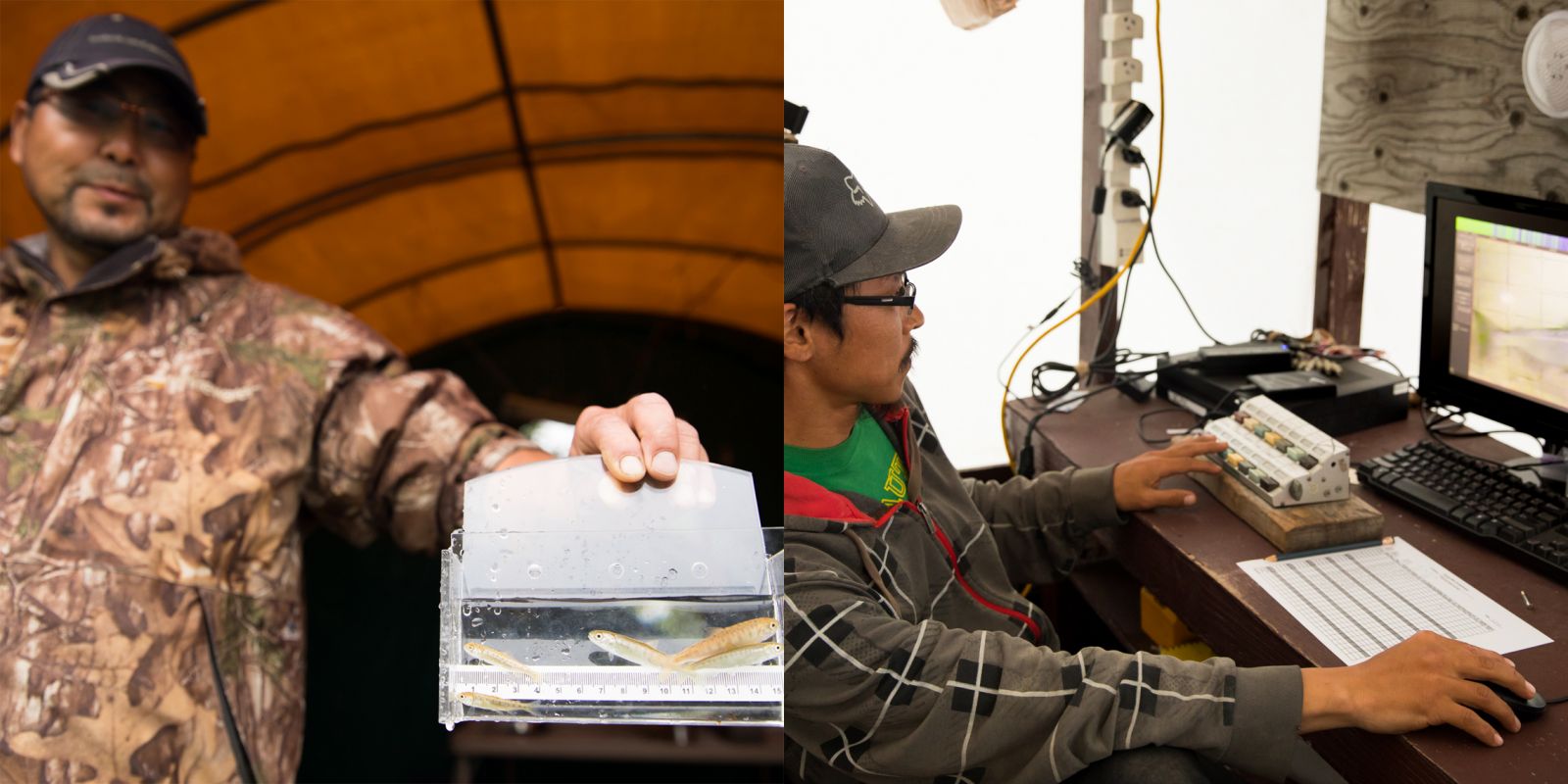
The Chinook Run Timing model and forecast is a valuable tool that has provided important information to fishery managers since 2015.
Publications
Mundy, P. R., & Evenson, D. F. (2011). Environmental controls of phenology of high-latitude Chinook salmon populations of the Yukon River, North America, with application to fishery management. ICES Journal of Marine Science, 68(6), 1155-1164.
Mundy, P. R., & Evenson, D. F. (2011). Environmental controls of phenology of high-latitude Chinook salmon populations of the Yukon River, North America, with application to fishery management. ICES Journal of Marine Science, 68(6), 1155-1164.
Murphy, James, Howard, Kathrine, Cosden Gann, Jeanette, Cieciel, Kristin, Templin, William, Guthrie III, Charles. (2016). Juvenile Chinook Salmon abundance in the northern Bering Sea: Implications for future returns and fisheries in the Yukon River. Deep Sea Research Part II: Topical Studies in Oceanography. 10.1016/j.dsr2.2016.06.002.
Principal Investigators
Bryce Mecum

Phil Mundy